Interactive Visual Instrument, 2026
Web, Canvas 2D, Real-time Image Processing
Web, Canvas 2D, Real-time Image Processing
How many different images can a single image become?
PRISM passes one source image through eight distinct visual languages. As a prism splits white light into a spectrum, this work splits a single image into eight modes of seeing: the collapse of signal (glitch), the materiality of print (halftone, dithering), the density of characters (ASCII), the illusion of symmetry (kaleidoscope). Each effect is a different eye looking at the same image.
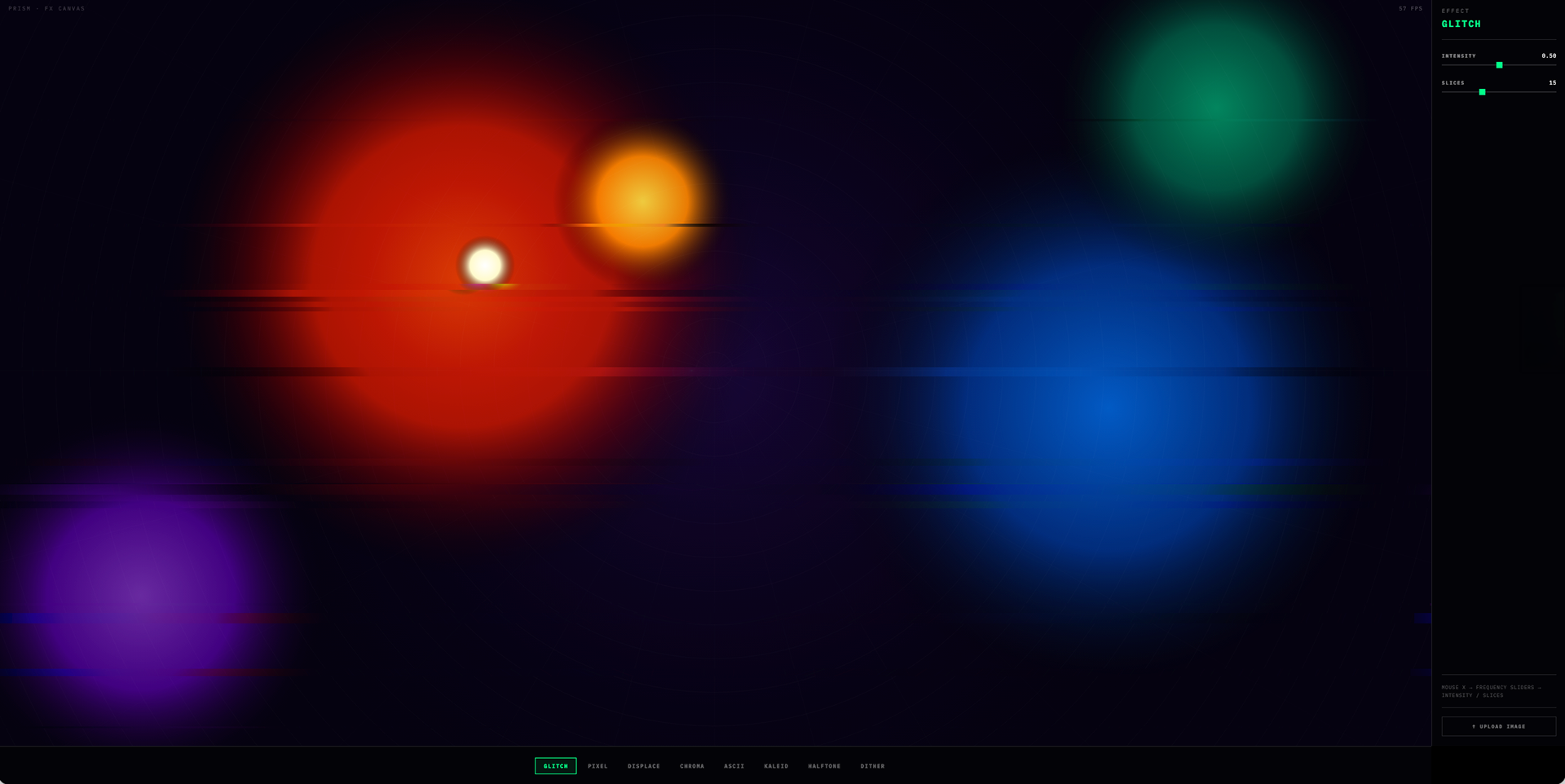
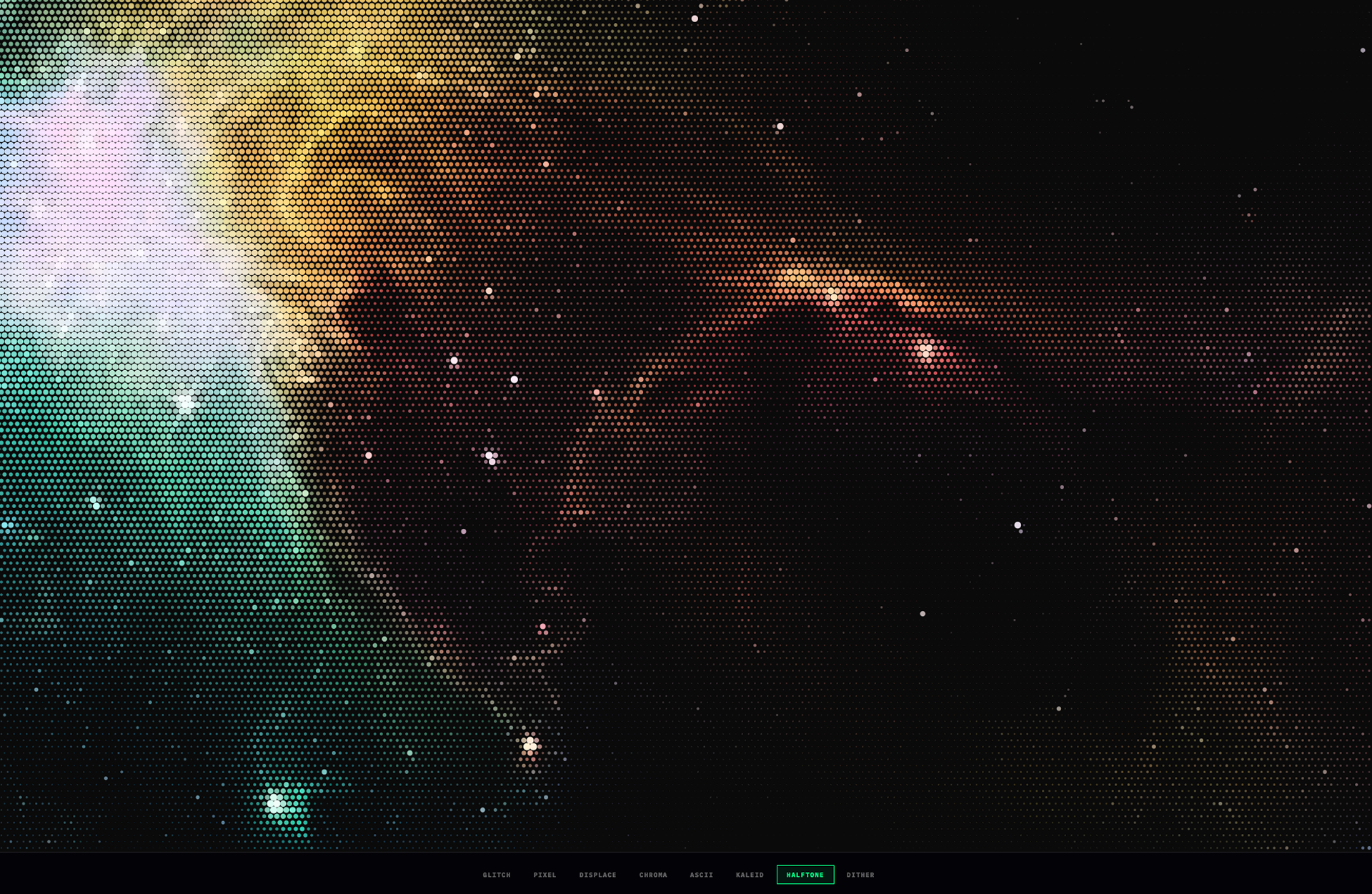
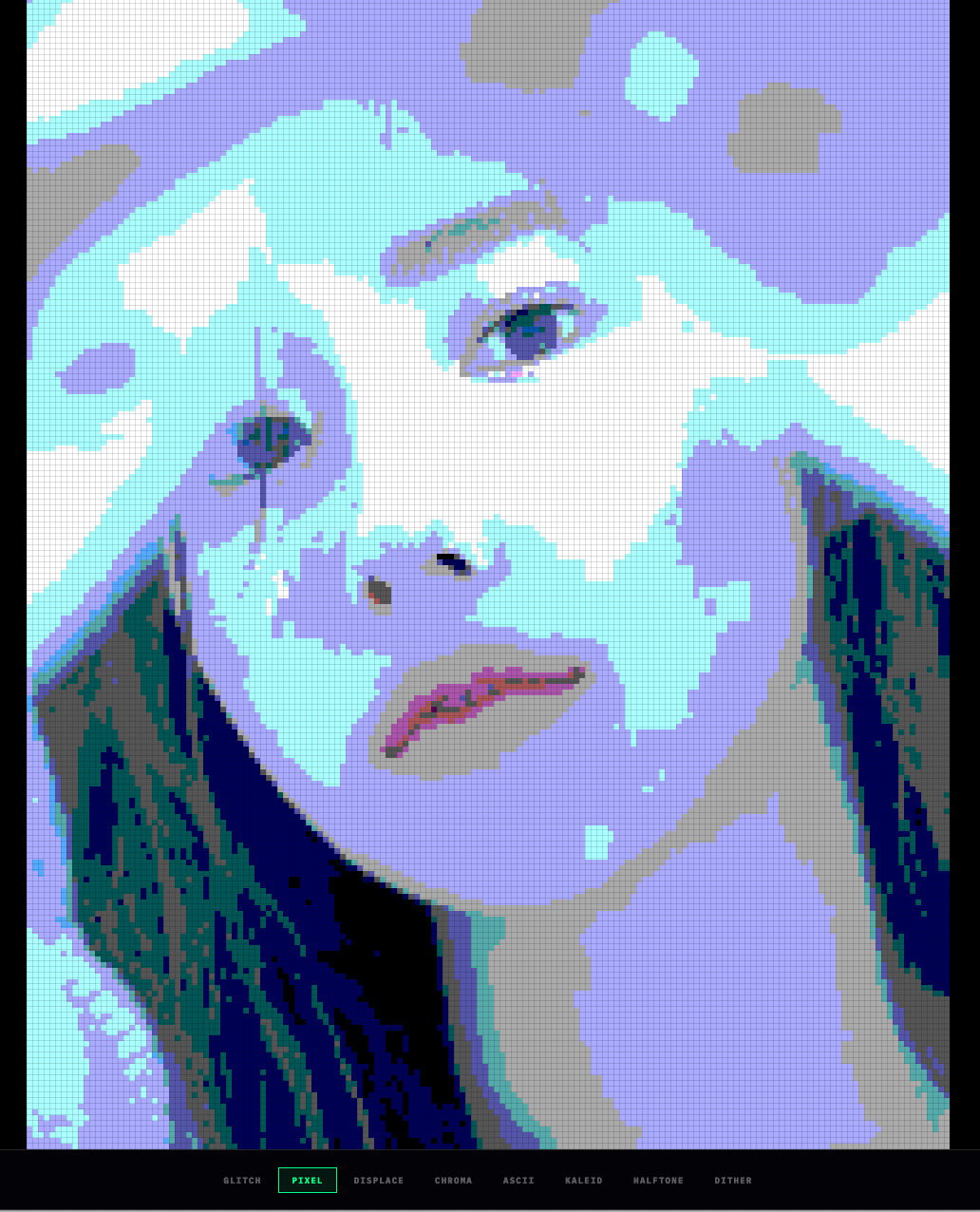
The viewer does not watch this work — they play it. The cursor's position becomes the effect's parameter; the image transforms in real time, following the hand as it moves across the screen. Adjusting a slider is changing a lens. And the moment viewers upload their own image, they become both performer and score.
Every effect is built from pixel-level computation alone, without external libraries. Here, an image is not a finished picture but hundreds of thousands of numbers recalculated every frame. PRISM places that fluid nature of the digital image — its readiness to become something else at any moment — directly into the viewer's hands.